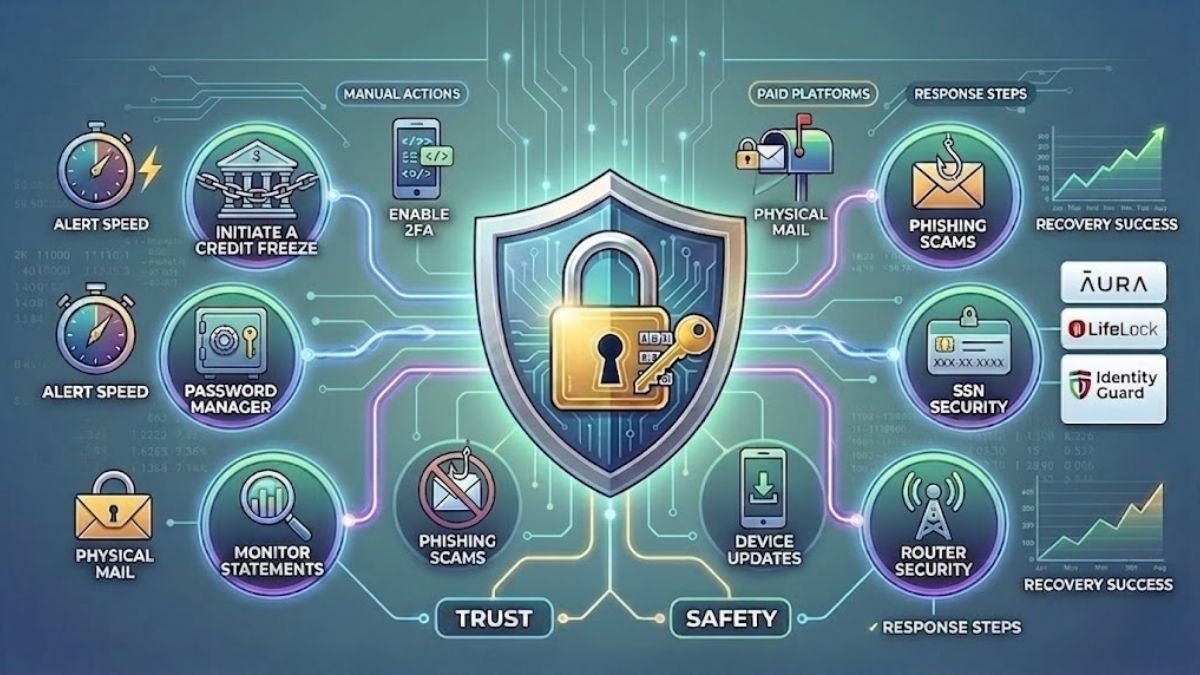
Learning how to protect yourself from identity theft is one of the most critical steps you can take to secure your financial future in an era of constant data breaches and sophisticated digital fraud. When personal information falls into the wrong hands, criminals can open fraudulent accounts, drain bank balances, and wreck your hard-earned credit standing within hours. Securing your digital presence requires a proactive combination of automated monitoring, smart account settings, and careful daily security habits.
While manual credit freezes are a vital first step, professional personal data security platforms provide real-time automated monitoring and a financial safety net that manual efforts simply cannot replicate.
Table of Contents
Simple Ways to Protect Your Personal Information Online
Defending your digital footprint means building a multi-layered shield around your most sensitive details, such as your Social Security number, financial accounts, and personal identifiers. Because online threats evolve rapidly, relying on simple passwords or occasional credit checks is no longer enough to stay safe.
- Initiate a Credit Freeze: Contacting the three major bureaus—Equifax, Experian, and TransUnion—to lock access to your files is the most effective free method to stop hackers from opening unauthorized accounts in your name.
- Enable Two-Factor Authentication (2FA): Activating multi-factor authentication across all financial, email, and social media platforms ensures that even if someone steals your login credentials, they cannot access your accounts without a secondary verification code.
- Utilize a Dedicated Password Manager: Avoid reusing passwords across multiple sites; instead, use an encrypted manager to generate and store complex, unique phrases for every online account.
- Monitor Financial Statements Weekly: Routinely checking bank accounts and credit card statements allows you to spot and report unauthorized charges immediately before serious damage is done.
- Scrub Your Info from Data Broker Sites: Frequently use removal tools or manual opt-out requests to delete your public records from “people search” engines, which bad actors use to gather background data for targeted phishing schemes.
- Secure Your Physical Mail: Empty your mailbox daily or invest in a locking mailbox to prevent thieves from stealing bank statements, tax documents, or pre-approved credit offers.
- Be Cautious of Public Wi-Fi Networks: Never access your financial accounts or input sensitive passwords while connected to unsecured public networks unless you are utilizing a high-quality virtual private network (VPN).
- Recognize Sophisticated Phishing Scams: Train yourself to ignore unsolicited text messages, emails, or phone calls requesting urgent verification of account details, even if they appear to come from legitimate institutions.
- Shred Sensitive Paper Documents: Always run old tax returns, bank statements, medical bills, and credit card offers through a cross-cut shredder before throwing them in the trash.
- Protect Your Social Security Number: Never carry your physical card in your wallet, and strictly question any business, utility, or medical provider that asks for your number before offering services.
- Audit Your Credit Reports Regularly: Use government-authorized portals like AnnualCreditReport.com to review your credit files weekly for any suspicious accounts, hard inquiries, or address changes you didn’t authorize.
- Set Up Real-Time Transaction Alerts: Configure your banking apps to send instant push notifications or text alerts for any transaction over a specific dollar amount or any online purchase.
- Keep Your Device Software Updated: Enable automatic software updates on your smartphone, computer, and router to patch security vulnerabilities that hackers exploit to deploy malware.
- Establish a My Social Security Account: Creating your official profile with the Social Security Administration early prevents fraudsters from setting up an account in your name to steal your future benefits.
- Secure Your Home Router: Change the factory-default administrator password on your home Wi-Fi network and ensure it uses modern encryption standards like WPA3.
- Review Your Medical Explanation of Benefits: Check your medical insurance statements carefully to ensure no one is using your identity to receive fraudulent medical treatments or prescription drugs.
- Be Skeptical of Social Media Oversharing: Avoid posting details like your birth date, mother’s maiden name, pet names, or hometown, as scammers use these public clues to guess your security questions.
- Protect Your Digital Devices with Biometrics: Always secure your smartphone and tablet with strong PINs, facial recognition, or fingerprint scans to prevent data exposure if your device is lost or stolen.
- Opt Out of Pre-Approved Credit Offers: Visit OptOutPrescreen.com to officially stop credit reporting agencies from selling your data for pre-approved credit card mailings, reducing the risk of mail theft.
- Watch for Direct Deposit Redirection Fraud: Periodically log into your workplace payroll portal to confirm your direct deposit routing numbers haven’t been altered by malicious actors.
- File Your Income Taxes Early: Submitting your state and federal tax returns as early as possible prevents fraudsters from using your Social Security number to claim an unauthorized tax refund.
- Safeguard Your Digital Identity Profiles: Regularly audit the “Logged In Devices” section of your primary email accounts to ensure no unauthorized smartphones or computers have access to your messages.
- Use Virtual Credit Cards for Online Shopping: Leverage services from your card issuer that create temporary, burner card numbers for online purchases, keeping your actual account number hidden from e-commerce data breaches.
- Understand Digital Estate Safety: Secure the accounts of deceased family members by notifying the credit bureaus and social networks immediately, as unmonitored deceased profiles are common fraud targets.
- Create Strong Security Question Answers: When setting up security questions, provide fake, memorable answers instead of real information that can be researched online, treating the answers like secondary passwords.
The Most Important Factors That Influence Personal Fraud Prevention
Understanding the mechanics of how digital identity protection works allows you to allocate your time and resources toward the security measures that offer the highest level of safety.
The Absolute Protection Level of a Credit Freeze
- The Ultimate Barrier: According to the Consumer Financial Protection Bureau (CFPB), a security freeze is the most powerful tool available to stop identity theft because it completely blocks new lenders from checking your history.
- Why It Matters: Since most banks and credit card companies will not open a new account without verifying your credit history first, a freeze significantly reduces the risk of identity thieves building a fraudulent profile in your name.
- Unfreezing Process: When you genuinely need to apply for a loan or a new card, you can easily use your secure PIN to temporarily lift the freeze within minutes via the bureau’s website or app.
The Threat of Synthetic Account Creation
- The Modern Scam: Criminals no longer just steal your entire digital persona; they often practice synthetic fraud, which involves mixing your real Social Security number with a completely fake name and address.
- Targeting the Innocent: This tactic frequently targets children, seniors, or individuals with limited history who don’t monitor their financial standing regularly, allowing the fraud to go unnoticed for years.
- Detection: Premium personal data security platforms or careful manual reviews of your official reports are the only ways to catch these hybrid accounts before they cause severe credit damage.
Common Mistakes to Avoid When Securing Your Identity
Building a solid defense strategy requires avoiding typical pitfalls that leave your personal data vulnerable to exploitation:
- Assuming a credit alert is the same as a freeze: An alert simply tells lenders to verify your identity, whereas a freeze completely locks down access to your data.
- Reusing a master password across financial apps: If one platform suffers a data breach, hackers will immediately try those identical login credentials on every major banking site.
- Clicking links in fraud text notifications: Scammers frequently send fake “bank alerts” designed to trick you into entering your login details into a lookalike website.
- Leaving old financial accounts unmonitored: Abandoned checking accounts or store credit cards are prime targets for criminals who assume you aren’t checking the statements.
- Throwing utility bills straight into the recycling: Trash pullers look for old water, electric, or phone bills to use as proof of address when manufacturing fake physical IDs.
Comparison: Manual Security Actions vs. Paid Protection Platforms
| Security Method | Cost | Setup Time | Primary Benefit | Main Limitation |
| Manual Credit Freezes | Free | 15–30 Minutes | Blocks unauthorized new credit accounts | Does not monitor dark web or existing bank fraud |
| Two-Factor Authentication | Free | 5 Minutes per site | Stops unauthorized account access | Requires user discipline to manage login tokens |
| Paid Identity Services | Monthly Fee | 10 Minutes | Real-time dark web alerts & $1M+ insurance | Requires ongoing financial subscription costs |
| Paper Document Shredding | Low (One-time cost) | Ongoing | Prevents physical dumpster-diving theft | Only addresses local, non-digital data threats |
How to Respond If Your Personal Data Is Compromised
If you discover that your information has been stolen or exposed in a major data breach, taking immediate action can significantly limit the financial damage.
- Visit IdentityTheft.gov Immediately: This official government portal managed by the Federal Trade Commission (FTC) provides a personalized, legally recognized recovery plan to help you dispute fraudulent accounts.
- Contact Your Financial Institutions: Call the fraud departments of your banks and credit card companies to close compromised accounts, change account numbers, and issue new debit cards.
- File a Local Police Report: Having a physical copy of a police report is critical when disputing fraudulent debts with collections agencies and clearing your name.
- Notify the IRS Fraud Unit: If you suspect your Social Security number is being used for tax fraud, submit Form 14039 to secure your future tax filings with an IRS Identity Protection PIN.
Frequently Asked Questions (FAQ)
Is a credit freeze better than a credit alert?
Yes, a credit freeze is much stronger. A freeze completely blocks lenders from pulling your file, while an alert merely requests that businesses take extra steps to verify your identity before granting credit.
Does identity theft protection insurance cover stolen money?
Most premium protection platforms offer insurance policies up to $1 million that cover legal fees, identity restoration specialists, and, depending on the tier, reimbursement for direct funds stolen from bank accounts.
Can someone steal your identity with just your name and date of birth?
While it is harder to open credit accounts without a Social Security number, scammers can use your name and birth date to execute phishing attacks, guess password reset questions, or access public records.
How do I know if my information is on the dark web?
You can use reputable, free dark web scanning tools provided by major security companies or your credit card provider to see if your email address or passwords have been leaked in past corporate data breaches.
Trust Disclaimer
Digital safety standards and reporting timelines vary depending on federal regulations and individual financial institutions. Taking preventative steps reduces your risk but cannot eliminate it entirely. Always verify identity security guidelines with official government bodies like the Federal Trade Commission (FTC) or the Consumer Financial Protection Bureau (CFPB).
Conclusion
Protecting your personal data is a continuous process of maintaining strong digital boundaries rather than a one-time setup. By implementing essential habits like freezing your credit files, enabling two-factor authentication, and monitoring your financial statements regularly, you build a strong layer of protection against modern fraud. These proactive actions help prevent automated cybercrimes from disrupting your life, ensuring you maintain a clean financial history, secure bank accounts, and greater peace of mind.