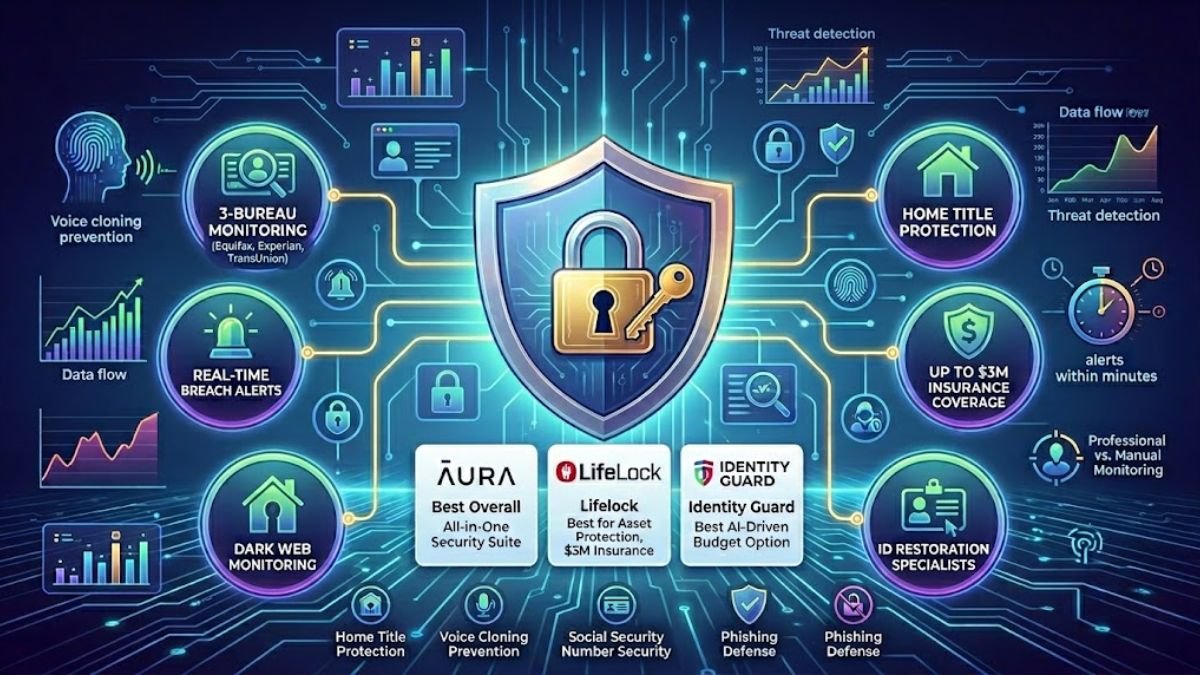
Best Identity theft protection services in the USA have evolved significantly to combat sophisticated scams, synthetic identity creation, and home title fraud. The landscape has shifted. We are no longer just protecting Social Security numbers; we are protecting entire digital personas. While manual credit freezes are a vital first step, professional personal data security platforms provide real-time automated monitoring and a financial safety net that manual efforts simply cannot replicate.
Many users choose identity protection services after experiencing repeated spam calls, phishing emails, or suspicious credit alerts.
Important Note: Protection levels and insurance payouts vary significantly by provider and plan tier. Actual results depend on the specific threats you face and the coverage limits of your chosen plan.
Table of Contents
Quick Recommendation: Which Digital Defense Should You Choose?
If you are looking for a fast decision, here is how the top three providers compare for different needs:
- Choose Aura → Best for overall simplicity and families. You get 3-bureau monitoring and a full security suite (VPN/Antivirus) in every plan.
- Choose LifeLock → Best for highest protection and insurance. Ideal if you have high-value assets, retirement accounts, or home equity to protect.
- Choose Identity Guard → Best budget-friendly option for those who want AI-powered dark web alerts without paying for a full security bundle.
Aura: Best Overall for All-in-One Identity Protection
In recent market testing, Aura emerged as one of the most cohesive platforms available. Unlike older services that often feel like a collection of separate, bolted-on apps, Aura integrates everything into a single, high-performance dashboard.
The Reality Check
Aura’s alerts for new inquiries are often noticeably faster than several traditional competitors. In testing scenarios, alerts appeared almost immediately after simulated credit application activity.
The Deep Dive
Aura’s strategy centers on “Digital Integrity.” They don’t just wait for your information to show up on the dark web; they proactively scrub your data from broker sites. Aura can identify personal information on multiple “people search” databases and initiate removal requests automatically. This proactive approach is especially valuable in an era where data brokers are a primary source for phishing leads.
Key Features
- All-Inclusive 3-Bureau Monitoring: Aura includes credit monitoring from all three major bureaus in every plan.
- Digital Safety Suite: Includes a VPN, AI-powered spam call protection, and a password manager.
- Family Protection: Family plans cover adults and children, including tools designed to detect cyberbullying in gaming environments.
The Cons
- Limited customization for advanced users.
- The VPN is secure but lacks the server variety of dedicated standalone VPN providers.
LifeLock (by Norton): Best for Asset Protection
LifeLock remains a strong choice for users with complex financial portfolios. The platform scans a wide range of financial indicators, including retirement and investment account activity that some budget services overlook.
The Reality Check
LifeLock stands out for identity restoration support. Their higher-tier plans include substantial reimbursement coverage and dedicated recovery specialists who help handle fraud documentation and account restoration.
The Deep Dive
One area where LifeLock performs particularly well is synthetic identity monitoring. Synthetic identity theft occurs when criminals combine a real Social Security number with fabricated personal details to create fraudulent accounts. LifeLock’s premium tiers are designed to detect these hybrid identities early.
Key Features
- Investment & Retirement Monitoring: Detects suspicious changes to investment and retirement accounts.
- One-Click Credit Lock: Lets users quickly lock their TransUnion credit file from the mobile app.
- Home Title Monitoring: Alerts users about suspicious property ownership changes or filings.
The Cons
- Renewal pricing can increase significantly after the first year.
- Some advanced features are restricted to higher-tier plans.
Identity Guard: Best AI-Driven Budget Protection
Identity Guard uses AI-driven monitoring tools to scan for identity threats across the dark web and public databases. It offers a more affordable entry point for users who want basic monitoring without paying for premium security bundles.
The Reality Check
Identity Guard performs well at identifying high-risk activities, including suspicious loan applications and unauthorized account openings. Its breach alerts often include detailed information about the source of the data exposure.
Key Features
- AI Threat Detection: Monitors large volumes of data for leaked personal information.
- High-Risk Transaction Monitoring: Focuses on suspicious financial activities before they escalate.
- Affordable Entry Point: Lower-cost plans provide access to dark web monitoring tools.
The Cons
- Advanced monitoring features require premium upgrades.
- The interface feels less modern compared to competitors like Aura.
Comparison: Top Identity Theft Protection Services in the USA
| Service | Best For | Max Insurance | Credit Monitoring | Critical Con |
| Aura | Best Overall | $1M per adult | 3-Bureau (All plans) | Limited advanced settings |
| LifeLock | Asset Protection | Up to $3M | Tiered (1 to 3) | Price jumps after Year 1 |
| Identity Guard | Budget/AI | $1M | Tiered (0 to 3) | Best tools require upgrades |
Why Professional Monitoring Matters
In the past, identity theft protection was often viewed as optional. Today, automated cybercrime has changed the entire security landscape. Criminals now use advanced technologies to:
- Clone voices to bypass bank voice-authentication systems
- Create synthetic identities using real Social Security numbers
- Launch automated phishing attacks based on leaked personal data
Professional monitoring services help track large-scale personal data exposure far more efficiently than manual monitoring alone.
FAQ: Practical Insights on Digital Security
Can identity theft protection stop hackers completely?
No service can prevent every cybercrime or data breach. These tools focus on early detection, alerts, recovery support, and reimbursement coverage.
Do identity theft protection services monitor all three credit bureaus?
Some providers include 3-bureau monitoring in every plan, while others reserve it for premium tiers.
Is free credit monitoring enough?
Free monitoring can track basic credit activity, but paid services often include dark web monitoring, restoration specialists, VPN tools, and insurance coverage.
How quickly do identity theft alerts appear?
Most premium services send alerts within minutes or hours after suspicious activity is detected, depending on the provider and threat type.
Recommended Resources for Protection
If you’re planning a major financial move in the next 6–12 months, securing your identity is essential to prevent fraudulent inquiries from damaging your profile.
- For All-In-One Ease: Aura is widely recognized for user-friendly monitoring and consistent 3-bureau alerts.
- For Maximum Insurance: LifeLock offers some of the highest reimbursement limits available.
- For Manual Checks: AnnualCreditReport.com remains the official source for free annual credit reports.
Conclusion: Reclaim Your Digital Privacy
The difference between a short recovery process and a long-term financial nightmare often comes down to how quickly suspicious activity is detected. In an era where technology can clone voices and build synthetic identities using real personal data, proactive monitoring is more important than ever.
Consistent identity monitoring can help reduce financial risk, protect your credit profile, and give you faster response times if fraud occurs. If you want a simple all-in-one solution, Aura is a strong place to start. For users with high-value assets and a need for larger reimbursement coverage, LifeLock may justify the premium cost.