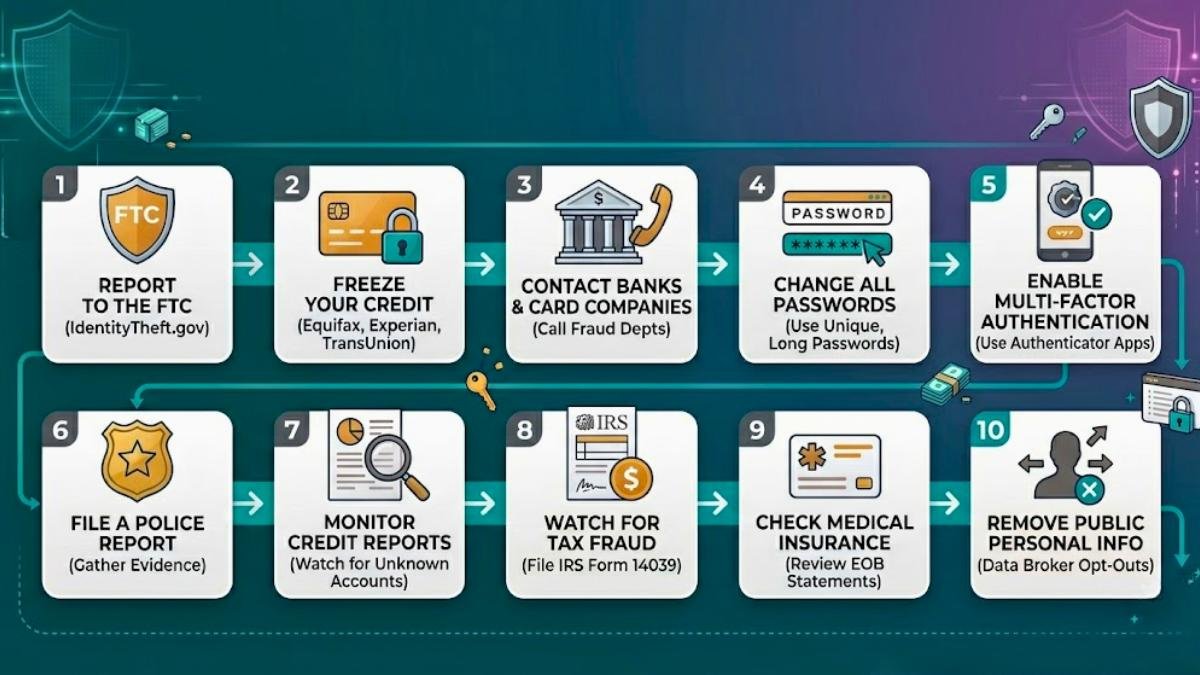
Knowing what to do if your identity is stolen can help you reduce financial damage, secure your accounts, and recover your credit faster.
Identity theft can happen after data breaches, phishing scams, SIM-swapping attacks, stolen mail, or leaked personal information. The faster you act, the better your chances of preventing scammers from opening accounts, stealing tax refunds, or accessing your financial information.
This guide explains the most important recovery steps to take after identity theft and how to protect yourself from future fraud.
Table of Contents
Immediate Steps To Take After Identity Theft
When your private information is compromised, following a structured recovery plan helps reduce further risks and prevents attackers from exploiting additional security gaps.
Report the Identity Theft to the FTC
What To Do
Visit IdentityTheft.gov and submit an official identity theft report through the Federal Trade Commission (FTC).
Why It Matters
The FTC report helps prove fraudulent activity occurred without your permission.
Important Note
Most banks, lenders, and credit bureaus may request a copy of this report before removing fraudulent accounts or reversing unauthorized charges.
Freeze Your Credit Immediately
What To Do
Contact all three major credit bureaus and request a security freeze on your credit files:
- Equifax
- Experian
- TransUnion
Why It Matters
A credit freeze blocks lenders from accessing your credit report, making it much harder for scammers to open new accounts in your name.
Important Note
A fraud alert adds extra verification steps, but a full credit freeze provides stronger protection.
Contact Your Banks and Credit Card Companies
What To Do
Call the fraud departments for all affected financial accounts and ask them to:
- Lock or close compromised accounts
- Replace debit or credit cards
- Flag accounts for additional verification
- Issue new account numbers if necessary
Why It Matters
Quick reporting may help limit unauthorized transactions and improve your chances of reimbursement.
Important Note
Maintain a detailed record of every phone call, including representative names, dates, times, and case numbers.
Change Your Passwords
What To Do
Update passwords for:
- Email accounts
- Banking apps
- Shopping websites
- Work accounts
- Social media profiles
Use long, unique passwords for every account and store them in a trusted password manager.
Why It Matters
Cybercriminals often test leaked passwords across multiple websites using automated attacks.
Important Note
Secure your primary email account first because it is usually connected to password recovery systems.
Enable Strong Multi-Factor Authentication
What To Do
Turn on multi-factor authentication (MFA) for all important accounts. Whenever possible, use authenticator apps or hardware security keys instead of text-message verification codes.
Why It Matters
SMS verification codes can sometimes be intercepted during SIM-swapping attacks.
Recommended Apps
- Google Authenticator
- Microsoft Authenticator
- Authy
- Bitwarden
File a Police Report
What To Do
Visit your local law enforcement agency and file an identity theft report. Bring:
- Government-issued photo ID
- Proof of address
- FTC report documentation
- Evidence of fraudulent activity
Why It Matters
A police report may help support disputes involving fraudulent debts or collection agencies.
Important Note
Some creditors and financial institutions may require an official police report before removing fraudulent activity.
Monitor Your Credit Reports
What To Do
Review your credit reports regularly through AnnualCreditReport.com.
Look for:
- Unknown accounts
- Hard inquiries you do not recognize
- Incorrect addresses
- Collection notices
Why It Matters
Identity thieves sometimes wait months before using stolen information to avoid immediate detection.
Important Note
Continue monitoring your credit even after the initial fraud appears resolved.
Watch for Tax Fraud
What To Do
If your Social Security Number may have been exposed, submit IRS Form 14039 through the IRS identity theft portal.
Why It Matters
Scammers sometimes file fake tax returns using stolen Social Security Numbers to claim refunds.
Important Note
The IRS may issue you an Identity Protection PIN (IP PIN) for additional security.
Check Your Medical Insurance Records
What To Do
Review your Explanation of Benefits (EOB) statements and insurance claims carefully.
Why It Matters
Medical identity theft can lead to:
- Fraudulent medical bills
- Insurance claim problems
- Incorrect medical records
- False treatment history
Important Note
Report unfamiliar providers, prescriptions, or procedures immediately.
Remove Public Personal Information When Possible
What To Do
Submit manual data removal and opt-out requests to major data broker platforms and public people-search directories.
Why It Matters
Scammers often search public consumer databases to collect background details, such as old addresses or relative names, to guess security questions.
Important Note
Reducing your public digital footprint can lower your risk of phishing and social engineering attacks.
Common Identity Theft Recovery Mistakes To Avoid
Paying Fraudulent Debts
Never pay a debt created through identity theft. Even a small payment could complicate future disputes.
Ignoring Small Charges
Scammers often test compromised accounts with tiny transactions before making larger purchases.
Reusing Old Passwords
Once a password has been exposed, it should never be reused on another account.
Forgetting Backup Accounts
Old email accounts or unused financial profiles can still provide attackers with access points.
Failing To Keep Records
Save emails, letters, case numbers, and phone logs related to your recovery process.
Recovery Actions and Their Protective Outcomes
| Recovery Measure | Operational Timeline | Primary Security Outcome | Long-Term Strategic Benefit |
| FTC Affidavit Submission | 20–30 Minutes | Establishes formal, legally binding proof of the identity compromise. | Forces credit reporting bureaus and collectors to block fraudulent tradelines. |
| Multi-Bureau Credit Freeze | 15 Minutes | Blocks all prospective lenders from conducting hard checks on your profile. | Instantly stops hackers from opening new lines of financing or retail credit cards. |
| IRS Form 14039 Filing | Varies by Season | Attaches a strict, mandatory manual review flag to your Social Security Number database. | Prevents scammers from submitting fake annual tax returns to steal your refund checks. |
| Local Police Incident Report | 1–2 Hours | Creates an official local law enforcement documentation log of the identity crime. | Provides crucial legal leverage when forcing collections agencies to erase negative debts. |
How To Deal With Collection Agencies Regarding Fraudulent Debt
Request Written Verification
Ask debt collectors to provide complete documentation of the alleged debt, including account records and application details.
Send Your Identity Theft Documents
Provide copies of your FTC report and police report through certified mail when disputing fraudulent balances.
Request Written Communication Only
Ask collection agencies to stop calling and communicate only through written correspondence.
Confirm Removal From Credit Reports
Review your Equifax, Experian, and TransUnion reports after disputes are processed to ensure fraudulent entries are removed.
Frequently Asked Questions
Can someone steal your identity with only your name and address?
Usually not enough for full identity theft, but scammers may use this information for phishing attacks or background research.
Is a fraud alert enough protection?
Fraud alerts help, but a full credit freeze offers stronger protection against unauthorized credit applications.
Should I change my Social Security Number after identity theft?
In most cases, credit freezes, monitoring, and IRS protections are more practical than requesting a new Social Security Number.
Can identity theft affect my taxes?
Yes. Scammers sometimes use stolen Social Security Numbers to file fraudulent tax returns.
Does identity theft insurance cover stolen bank funds?
Most identity theft insurance policies focus on recovery expenses, legal support, and restoration services. Bank reimbursement policies vary by institution.
Trust Disclaimer
Identity theft laws, reporting procedures, and fraud recovery requirements may vary depending on your location, financial institutions, and the type of fraud involved. This article is intended for educational purposes only and should not replace legal, cybersecurity, or financial advice. For official guidance, consult trusted organizations such as the Federal Trade Commission (FTC), Consumer Financial Protection Bureau (CFPB), or Cybersecurity and Infrastructure Security Agency (CISA).
Conclusion
Identity theft can feel stressful, but quick action can help limit the damage and protect your accounts, credit, and personal information. The most important steps include freezing your credit, securing compromised accounts, updating passwords, and monitoring your financial activity regularly. Strong security habits like using unique passwords, enabling app-based authentication, and reviewing your credit reports can also reduce the risk of future identity theft attempts.