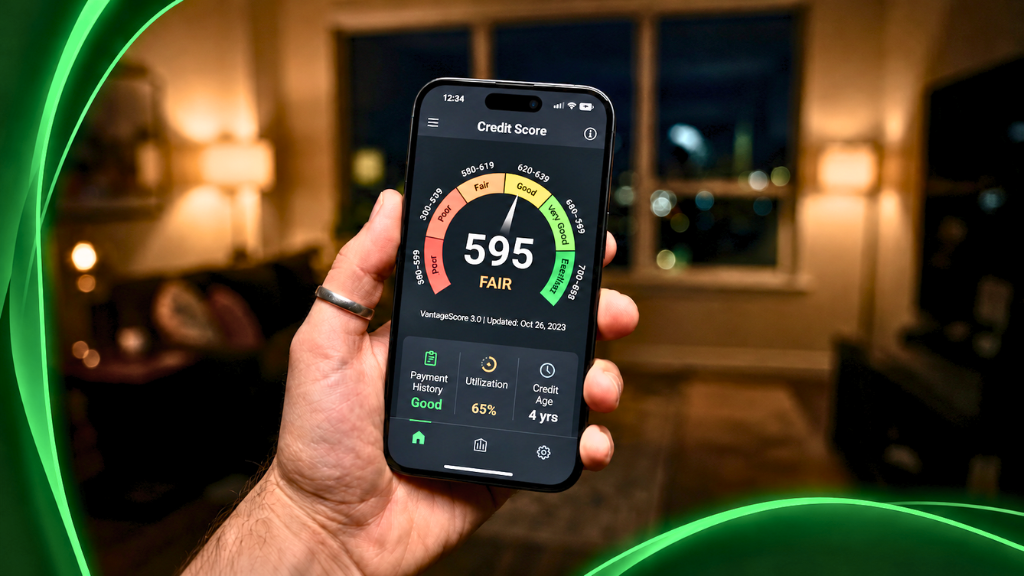
Learning how to check your credit score for free is one of the most immediate steps you can take to protect your financial profile and lower your lifetime cost of debt. The truth is simple: you can perform a credit score check without affecting credit as often as you like without ever dropping a single point.
A 50-point difference in your score could cost you thousands in extra interest, yet most people don’t even know their number. Whether you are recovering from identity theft or building a foundation for a first home, this guide will show you exactly where to look.
Table of Contents
How to Get Your Free Credit Score Right Now
To check your credit score for free, you can instantly log into your online banking portal or download verified apps like Experian and Credit Karma. Most major U.S. financial institutions provide a complimentary FICO® or VantageScore® that updates weekly or monthly. For a comprehensive look at your complete history, use AnnualCreditReport.com to pull your official credit reports entirely for free.
The Real-World Cost of Credit Scores
To understand why transparency matters, look at how a score impacts a standard $35,000 auto loan over 60 months in today’s market.
- The “Super Prime” Buyer (Score: 780+): Qualifies for a lower interest rate, often around 4.5% APR. They pay roughly $653/month.
- The “Fair Credit” Buyer (Score: 640): Might only qualify for a much higher rate, such as 10.5% APR. They pay $752/month.
The Result: The second buyer pays nearly $100 more every month—totaling thousands of dollars extra over the life of the loan—simply because they didn’t optimize their score before applying. Knowing how to check your credit score for free in USA allows you to fix these gaps before they cost you.
Difference Between a Score and a Report
Before you begin monitoring your profile, it is essential to understand the distinction between these two foundational records. Think of your credit report as your detailed history, while your credit score is the summary grade.
| Feature | The Credit Report | The Credit Score |
| What It Is | Your comprehensive financial transcript. | Your numerical credit grade. |
| The Data | A detailed log of your loans, credit cards, payment histories, and inquiries over the last 7 to 10 years. | A three-digit number calculated using the specific data found within your report. |
| Who Maintains It | The three major national bureaus: Equifax, Experian and TransUnion. | Independent scoring models, primarily FICO® and VantageScore®. |
| The Purpose | Shows lenders the exact details of how you manage your debt obligations over time. | Gives lenders a rapid snapshot of your overall credit risk at a single glance. |
Top Ways to Check Your Credit Score for Free
A. Use Your Bank or Credit Card Issuer
The most secure way to access your credit data is through a financial institution you already trust.
- Chase Credit Journey: Provides a free VantageScore 3.0.
- American Express (MyCredit Guide): Offers a free VantageScore.
- Capital One CreditWise: A popular free tool accessible even if you aren’t a Capital One customer.
- Discover: Provides the FICO® Score 8, the model used by 90% of lenders.
B. Official Credit Bureau Apps
The bureaus themselves offer free tiers. The Experian App is highly recommended because it gives you your Experian FICO score for free, whereas many other sites provide a VantageScore.
C. Free Third-Party Services
Websites like Credit Karma and Credit Sesame provide free updates.
- Credit Karma: Provides scores from both TransUnion and Equifax.
- Credit Sesame: Focuses on TransUnion data and often includes free identity theft insurance.
Mastering Financial Health: Essential LSI Concepts
To truly take control of your finances, you need to understand the variables that determine your creditworthiness. Checking your score is the first step, but understanding credit utilization and debt-to-income (DTI) ratios is how you actually move the needle.
- Credit Utilization Ratio: This is the amount of revolving credit you’re currently using divided by the total amount of credit available to you. It accounts for roughly 30% of your FICO calculation. Keeping this under 30%—and ideally under 10%—is a key factor in credit score optimization.
- Payment History: This is the most important factor, making up 35% of your FICO score. Even a single payment that is 30 days late can cause a significant and lasting drop in your numbers.
- Credit Mix: Lenders like to see that you can handle different types of accounts, such as installment loans (auto loans or mortgages) and credit cards.
- Hard vs. Soft Inquiries: A credit pull for a new application (hard inquiry) can lower your score, while a simple check of your own score (soft inquiry) has no impact.
FICO vs. VantageScore: Which One Matters?
When you check your credit score for free in the USA, you will likely see one of two models.
| Feature | FICO® Score | VantageScore® |
| Popularity | Used by 90% of lenders. | Growing in popularity for fintech. |
| History Needed | Requires 6 months of credit history. | Can score you with 1 month of history. |
| Availability | Often provided by banks. | Common on free monitoring apps. |
Pro Tip: If you are applying for a mortgage or a major auto loan, prioritize finding your FICO score, as that is the standard most lenders use.
Real-Life Example: Catching Identity Theft Early
Consider Sarah, a freelance designer. Sarah used a free monitoring app to check her score weekly. One morning, her score suddenly dropped 40 points. Because she was monitoring it for free, she immediately checked her report and found a fraudulent credit card opened in her name in another state. By catching it within days, she froze her credit and filed a police report before the thief could do more damage.
How to Get Your Full Credit Report for Free
Checking the score is only half the battle. You must verify the data.
- Go to AnnualCreditReport.com, the only site authorized by federal law in the United States for a free federal disclosure.
- Currently, you can access weekly free reports from all three bureaus.
- Review your report for derogatory marks, incorrect addresses, or accounts you didn’t open.
Strategic Management for Long-Term Success
Managing your credit is a marathon, not a sprint. Beyond simply knowing your score, you must understand the underlying factors that drive your financial profile.
Navigating Credit Age and Diversity
Lenders value experience. The length of your credit history and your credit mix contribute to your score. While you shouldn’t open accounts just to have them, maintaining a healthy mix shows financial responsibility. Furthermore, avoid closing old credit cards if they don’t have an annual fee, as they contribute to the average age of your accounts.
Final Steps for Financial Empowerment
Achieving a top-tier credit rating is within reach for anyone willing to be consistent. By using the free resources outlined in this guide, you remove the guesswork from your financial life.
- Audit Your Data: Use AnnualCreditReport.com to ensure there are no errors on your report.
- Monitor Regularly: Choose a free service like Credit Karma or your bank’s app to track your score’s movement.
- Correct Mistakes: If you find an error, use the dispute process through the relevant credit bureau to have it removed.
- Protect Your Identity: Use monitoring alerts to stay one step ahead of potential fraud.
Frequently Asked Questions
Is there a truly free way to check your credit score in the USA?
Yes. You can access your genuine credit scores completely free through your existing online banking portals, major credit card accounts, or trusted third-party monitoring services like Credit Karma. These platforms provide completely free access to either your FICO® or VantageScore® metrics without requiring a credit card or locking you into hidden paid subscriptions.
Does checking your own credit score lower it?
No, checking your own rating will never drop your credit score. Self-checks are categorized as “soft inquiries” or soft pulls. Because you are simply looking at your own information rather than applying for new lines of debt, these tracking events are mathematically incapable of damaging your profile, allowing you to monitor your numbers as frequently as you like.
How can I find out what my actual credit score is?
The most comprehensive method is to combine secure financial apps with official bureau tools. For a daily or monthly look at your VantageScore, you can log into your banking dashboards or third-party monitoring accounts. To see your actual FICO score—which is the specific model utilized by 90% of lenders—you can download the Experian app to access their free monitoring tier.
What website is authorized by the federal government for free credit data?
AnnualCreditReport.com is the only website explicitly mandated and authorized by federal law in the United States to issue free consumer credit reports. Under federal consumer guidelines, you can safely download your deep credit history files from all three national bureaus (Equifax, Experian, and TransUnion) to audit your transactions for inaccuracies without paying a single dollar.
Why are my credit scores different across different free apps?
It is completely normal to see a slight variation in your numbers across different tracking platforms. This occurs because free apps do not all use the same underlying parameters. For example, one platform might pull your TransUnion file using the VantageScore 3.0 model, while another shows your Experian file using FICO® Score 8. Additionally, creditors transmit raw data to the three national bureaus at different times throughout the monthly cycle.
What is a “good” credit score range in the United States?
While exact score ranges vary slightly depending on the specific model used, a score between 661 and 780 is widely categorized as “Good” by financial institutions. Sliding past the 781 mark places you into the “Excellent” or “Super Prime” tier, which automatically unlocks the lowest available interest rates and top-tier credit card approvals across the country.
Conclusion
Taking control of your financial future starts with transparency. In the modern economy, you cannot afford to be in the dark about your credit standing. By leveraging bank-provided tools, official bureau apps, and the federal protections offered by AnnualCreditReport.com, you can monitor your progress without spending a dime. Whether you are avoiding high interest rates or protecting yourself from identity theft, consistency is key: make it a habit to review your numbers monthly to ensure you are always positioned for the best possible financial opportunities.