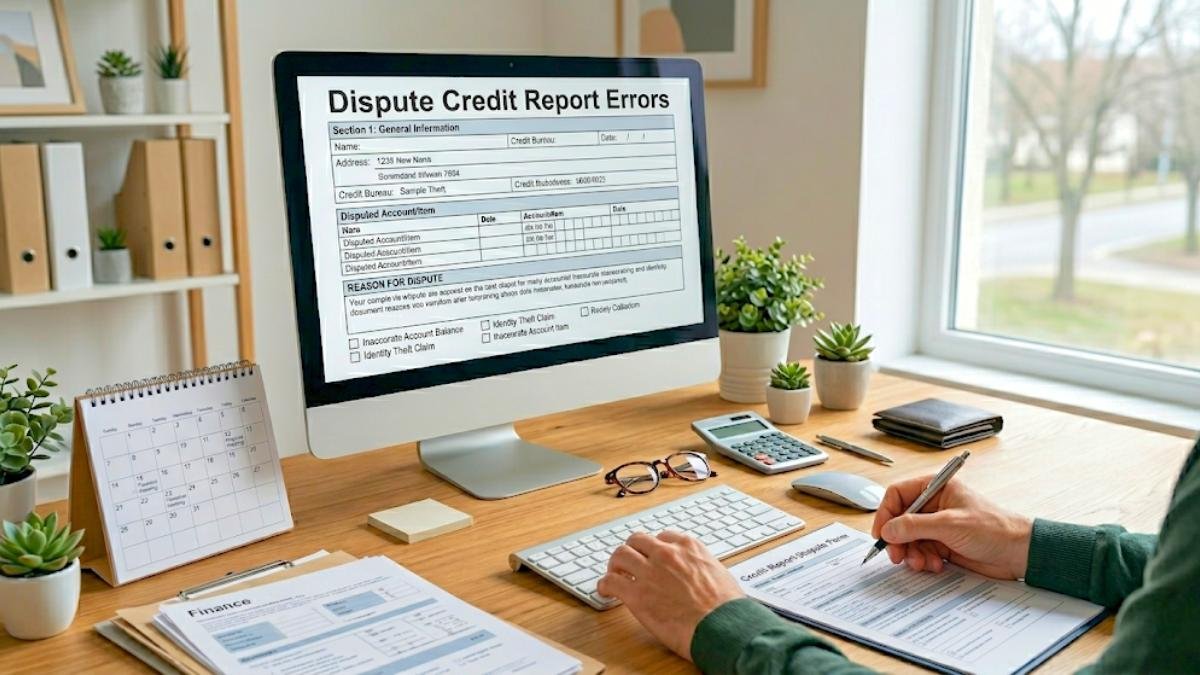
Keeping an eye on your financial history is just one of those things we all know we should do, but it often gets pushed to the back burner. However, learning exactly how to dispute credit report errors is one of the most valuable financial habits you can pick up. If your credit history contains simple mistakes or wrong information, your score can drop through no fault of your own, costing you thousands of dollars in higher interest rates or causing unexpected application rejections.
Fortunately, cleaning up these mistakes doesn’t mean you have to pay a pricey commercial repair service. Federal law gives you the absolute right to audit your files and challenge inaccurate entries directly with the credit reporting agencies at zero cost. This walkthrough explains how to locate factual mistakes, write clear challenge letters, and handle the investigation process on your own terms.
Table of Contents
6 Practical Steps to Challenge Inaccurate Information on Your Credit Reports
Correcting mistakes on your credit profile just takes a systematic approach. Instead of guessing or sending vague complaints, following a clear process ensures the credit bureaus take your request seriously. Results may vary depending on the accuracy of the information and creditor verification, but here is what to do:
Secure Your Official Financial Documentation
- An easy starting point: Grab your official files from all three major credit bureaus—Equifax, Experian, and TransUnion—using the government-authorized portal at AnnualCreditReport.com.
- How it works: Federal guidelines let you access these comprehensive documents online every single week for free, without hurting your score at all.
- Why this matters: You can’t really fix a problem until you view the exact details lenders see. Checking all three major files is important because creditors don’t always report your payment histories to every agency equally.
Conduct a Comprehensive File Audit
- What to look for: Grab a highlighter or open up a digital document and look over every single section of your credit profile line by line.
- Best practice: Check for structural mistakes, like identity errors (misspelled names, wrong addresses, or mixed files belonging to someone else) and account status errors (accounts mistakenly marked as late, closed, or duplicated).
- Why this matters: Credit databases process millions of records every day, making clerical glitches and system errors incredibly common. Identifying a single reporting mistake gives you the precise details you need to ask for a formal correction.
Gather Concrete Supporting Documentation
- What to do: Before reaching out to a credit bureau, collect any piece of physical or digital evidence that proves the information on your file is incorrect.
- Best practice: Gather items like bank statements showing on-time payments, lien release forms, final billing statements indicating a zero balance, or letters from the original company confirming an account closure.
- Why this matters: Credit reporting agencies can legally reject challenges they think are frivolous. Attaching clear, undeniable paperwork ensures the bureau is required to look into your claim rather than dismissing your request.
Draft a Specific, Professional Challenge Letter
- Experts recommend: Avoid downloading generic, pre-written internet dispute templates, as the automated scanning computers at credit bureaus easily flag and reject these forms.
- How it works: Write a clear, personal letter that states your full legal name, address, and Social Security Number. Identify the specific account number in question, clearly describe the exact error, and explain what correction you want made (like deleting an entry or updating a balance).
- Important note: Keep your tone calm, objective, and polite. Make sure to keep your original documents tucked away safely in a drawer and only mail clean photocopies to the credit bureaus.
Submit Your Challenge via Certified Mail
- Another important step: Send your dispute packet to the specific credit bureau displaying the error using certified mail with a return receipt requested.
- How it works: This mailing method gives you a physical tracking number and a signed receipt showing the exact date the credit bureau received your letter.
- Why this matters: Under consumer protection laws, credit bureaus generally have thirty days from the day they receive your letter to investigate and respond. Having a verified paper trail holds the agency accountable to this strict timeline.
Monitor the Official Response and Verify File Correction
- What to look for: Once the credit bureau finishes its investigation, they will mail or email you an official update along with a free, updated copy of your report.
- Best practice: Review the resolution details carefully. If the bureau finds that the information was indeed incorrect, they will update the status or remove the entry entirely.
- Important note: Check your remaining credit history to make sure the same error doesn’t remain active elsewhere, as you must dispute the mistake with each agency individually if it appears on multiple files.
Understanding the Consumer Laws That Protect Your Credit Profile
Successfully managing your financial records just requires a basic understanding of the legal safeguards designed to shield you from inaccurate reporting.
The Power of the Fair Credit Reporting Act (FCRA)
The FCRA is your strongest ally when protecting your credit health. This federal law dictates that everything listed on your report must be accurate, fully verifiable, and timely. If a creditor or credit bureau cannot produce the original documentation or payment records to verify an item you formally challenge, the entry can potentially be removed or updated in your credit history.
The Strict 30-Day Bureau Investigation Window
Federal regulations protect consumers by ensuring that credit reporting agencies cannot ignore your complaints indefinitely. Once a bureau receives your dispute packet, they must forward your evidence to the original creditor within five days. The creditor then has a limited window to audit their internal records. If the creditor fails to verify the account details before the 30-day timeline runs out, the credit bureau may be required to remove the account if the information cannot be verified.
Comparison: Free DIY Credit Disputes vs. Hiring a Paid Repair Firm
| Evaluation Metric | The DIY Account Correction Method | Paid Credit Repair Companies |
| Out-of-Pocket Cost | Completely free; you only pay for postage stamps and photocopies. | Costs $50 to $150+ every month, often with hidden starting fees. |
| Communication Control | High; you directly manage all letters, keep records, and handle your terms. | Low; a third party speaks on your behalf, often using automated forms. |
| Legal Authority | Total; you possess the absolute legal right to challenge your own data. | Identical; they use the exact same consumer protection laws available to you. |
| Process Transparency | Complete; you see every update, creditor response, and bureau letter first. | Low; the actual dispute steps remain hidden behind a corporate dashboard. |
| Long-Term Knowledge | High; you master the exact habits needed to keep your score healthy for good. | Low; you remain dependent on a service to monitor your information. |
Critical Mistakes to Avoid When Challenging Report Errors
Many well-meaning consumers accidentally stall their progress or ruin their credibility by making easily avoided mistakes during the dispute process:
- Submitting a dispute online without checking the fine print: Many people use online credit bureau dispute portals because they are fast, but some platforms contain terms that require you to waive your right to appeal a decision or file a future lawsuit if the bureau rules against you.
- Failing to contact the original creditor directly: Credit bureaus are just middle-men that collect data. If an auto lender or credit card company keeps sending wrong information, you should file a dispute with the creditor’s internal fraud department to stop the issue at the source.
- Filing too many generic disputes at the exact same time: Sending a single letter that challenges ten different valid accounts without attaching proof makes your request look suspicious. Using obvious internet dispute software or templates may reduce the likelihood of a detailed review if not supported with evidence.
- Forgetting to follow up on unresolved collection notices: If a credit bureau removes an unverified collection account from your report, the debt doesn’t magically disappear. The collection agency can still try to pursue the balance unless you formally demand debt validation.
- Ignoring the underlying accuracy of your data: Trying to dispute legitimate, accurately reported debts simply to see if they disappear rarely works long-term and can slow down investigations into actual identity issues.
How to Structure a Direct Creditor Dispute Letter
If a credit bureau investigation comes back “verified” but you know the information is entirely incorrect, writing directly to the business that reported the data is your next best step.
State Your Identifying Information Clearly
Begin your letter by listing your full legal name, current address, phone number, and the specific account number associated with their business. State clearly that you are writing to dispute inaccurate information under your consumer rights.
Identify the Exact Reporting Mismatch
Point out the precise detail that is wrong. For example, if they reported you as 60 days late on a payment but you have a bank confirmation showing you paid on time, state the exact date, transaction number, and dollar amount of the payment.
Demand a Formal Record Correction
Instruct the company to update their internal databases and send a correction notice to Equifax, Experian, and TransUnion. Explicitly state that if they cannot verify the negative entry with physical records, the item in some cases must be corrected if unverifiable.
Frequently Asked Questions
Can a credit bureau refuse to investigate my report challenge?
Yes. A credit bureau can reject a dispute if they have good reason to believe the claim is frivolous. This typically happens if you send multiple repetitive letters without providing any new supporting evidence. Keeping your letters specific, personal, and attaching real proof ensures an investigation takes place.
What should I do if a credit bureau rejects my dispute?
If a bureau finishes an investigation and decides to keep a negative mark on your report, you have the right to add a 100-word consumer statement to your file. This statement lets you explain your side of the story to anyone who pulls your credit history in the future. You can also file an official complaint with the Consumer Financial Protection Bureau (CFPB).
How does identity theft alter the credit dispute process?
If you discover inaccurate accounts on your report because someone stole your details, you should skip the standard dispute process. If your data was compromised due to a scam or database breach, you will need to file an official identity theft report through the FTC and review the proper steps for recovering your stolen identity right away. This gives you stronger legal leverage to block fraudulent accounts instantly.
Will a credit freeze stop a credit bureau from fixing a reporting error?
No. A credit freeze simply stops new lenders from looking at your financial records to open fresh accounts. It does not stop current creditors from updating your account statuses, nor does it prevent a credit bureau from investigating a dispute and correcting an error on your file.
Trust Disclaimer
Consumer protection laws, credit reporting guidelines, and local procedures can vary depending on your location, your specific financial institutions, and changing federal regulations. Taking a proactive approach to managing your documentation significantly improves your credit report data but cannot instantly delete legally verified, timely historical accounts. For official guidelines and step-by-step regulatory assistance, always consult recognized organizations like the Federal Trade Commission (FTC) or the Consumer Financial Protection Bureau (CFPB).
Conclusion: Take Control of Your Credit Profile
When you look closely at how to dispute credit report errors, it becomes obvious that consistent digital hygiene is your best shield against financial setbacks. Broken reporting systems count on the fact that most consumers go months or even years without looking over their credit record data. You don’t need to spend your money on third-party commercial repair businesses to clean up your record. Spending just a few minutes reviewing your free weekly files, keeping your correspondence strictly in writing, and using certified mail to track your deadlines puts you in complete control. These simple, protective steps ensure your borrowing profile stays accurate, lowering your overall fraud risk and positioning you for better long-term financial security.